

A Brief History — From Accidental Discovery to Clinical Tool
The story of PBM begins in 1967, in a Budapest laboratory, with a Hungarian physician named Endre Mester. While experimenting with a low-powered ruby laser on mice, Mester noticed something unexpected: the shaved skin near the laser application sites was growing back faster than the control group. He had not set out to discover a therapy — he had stumbled onto one. He called it "laser biostimulation," and his accidental observation launched decades of research into how specific wavelengths of light could influence biological tissue.
By the 1990s, NASA was using red and near-infrared light to study wound healing in space — where astronauts' bodies heal more slowly due to reduced gravity. The technology that began with a curious Hungarian scientist and a shaved mouse eventually made its way into operating rooms, sports recovery suites, and premium wellness clinics around the world.
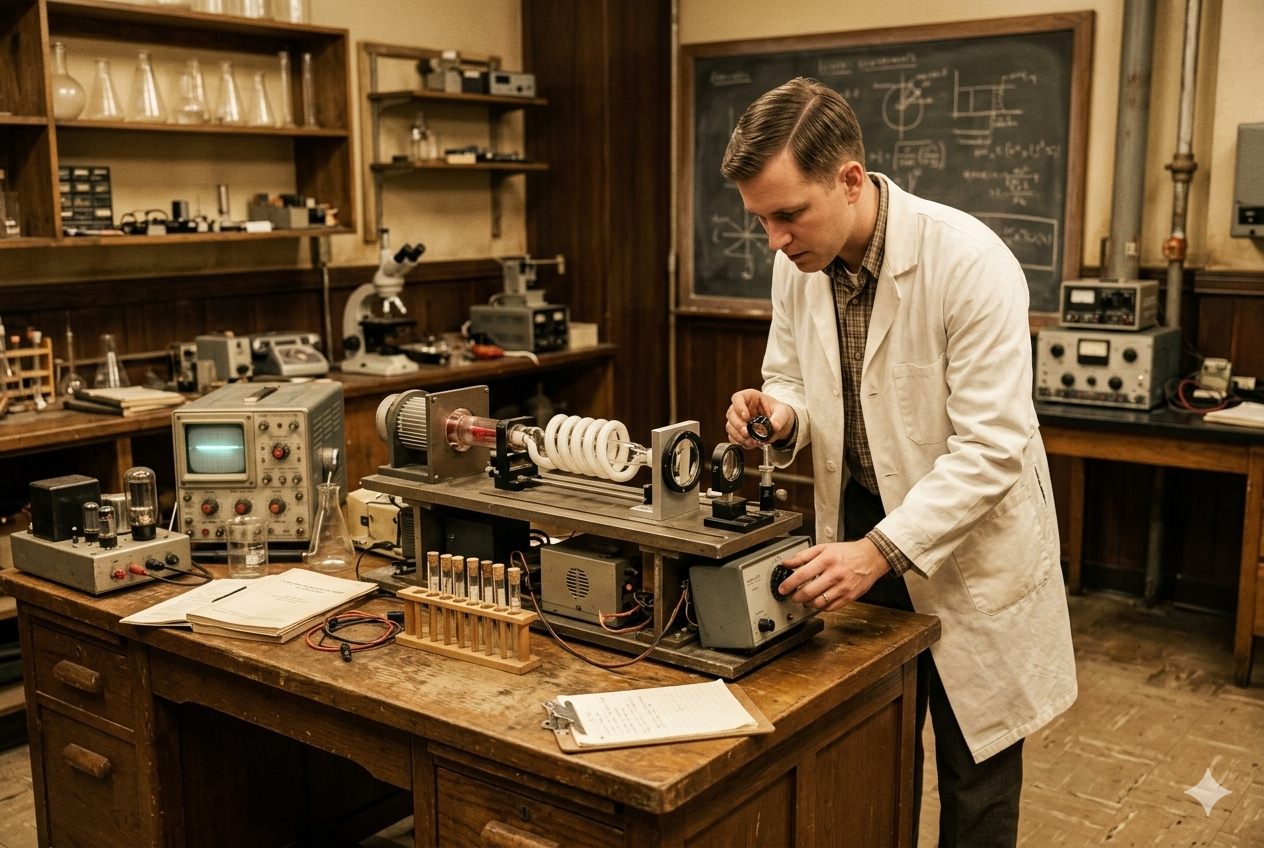
Early laser research, 1960s — where PBM began
So What Actually is PBM?
Photobiomodulation (PBM) is a non-invasive therapy that uses specific wavelengths of red (630–660nm) and near-infrared (810–940nm+) light to stimulate biological processes inside your cells. It produces no heat, causes no tissue damage, and requires no recovery time.
The name sounds complicated, but it breaks down simply: "photo" means light, "bio" means life, and "modulation" means changing or influencing. PBM is, quite literally, using light to influence living biology.
Think of it like charging a battery. Your cells have their own energy currency — a molecule called ATP. PBM helps your mitochondria produce more of it, giving cells the fuel they need to repair, regenerate, and perform at their best.
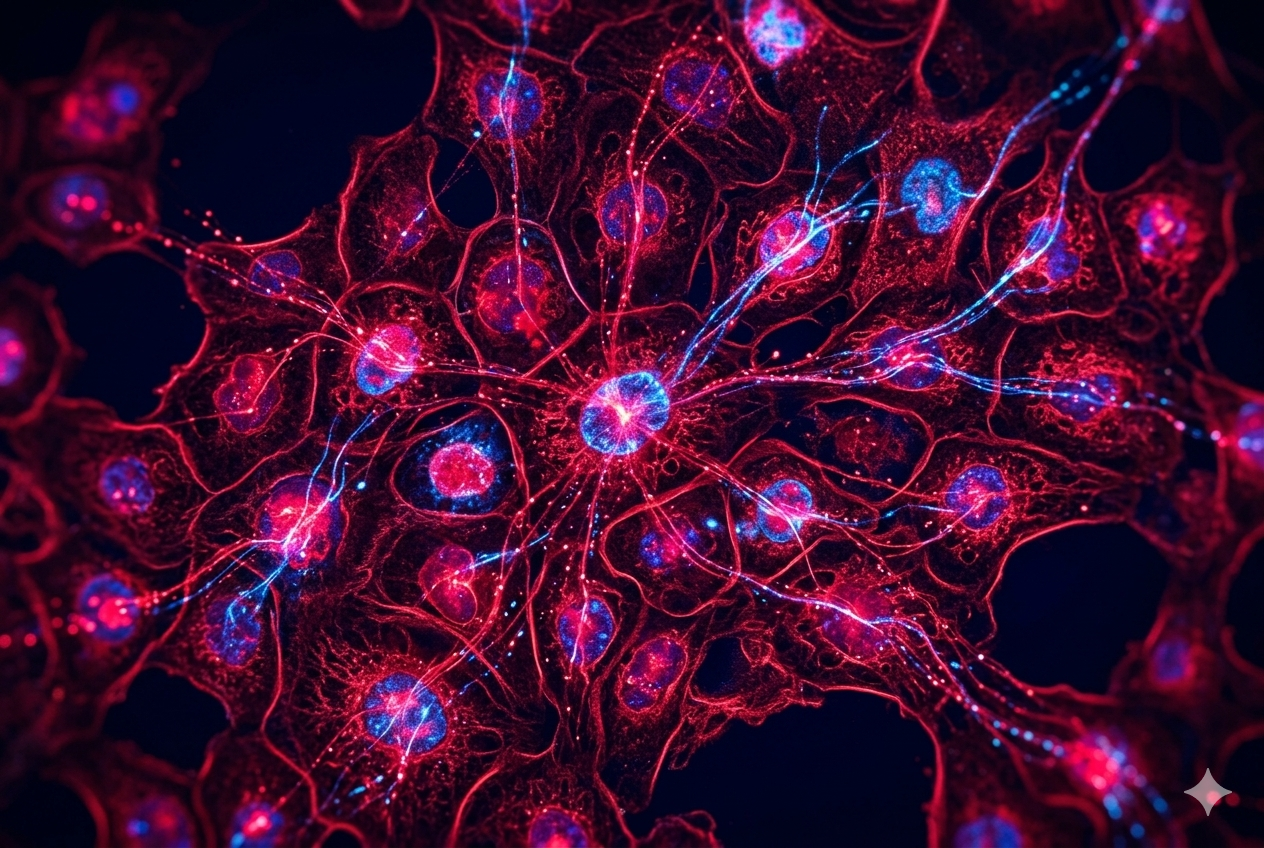
Red light absorbed by mitochondrial chromophores at the cellular level
How Does it Actually Work?
Light enters the body, gets absorbed by specific proteins inside your cells, and triggers a chain reaction that ends with your cells working better.
Red wavelengths (630–660nm) work close to the surface. Near-infrared (810nm+) travels deeper — into muscle, joints, bone, and even brain tissue.
Cytochrome c oxidase absorbs the light, releasing nitric oxide that was blocking the respiratory chain. The mitochondria produce more ATP.
With more ATP, cells do what they are designed to do — only faster. Skin cells ramp up collagen. Muscle cells repair micro-damage.
With repeated sessions, effects become systemic. Inflammation reduces. Circulation improves. Recovery times shorten.
Why Wavelength and Dose Matter
A common misconception is that more light equals more benefit. PBM does not work that way. It follows what is called a biphasic dose-response curve — too little light produces minimal effect, but too much can actually inhibit the biological processes it is supposed to stimulate. The therapeutic window is real, and it requires precision.
Similarly, wavelength is not interchangeable. Each wavelength activates specific chromophores and penetrates to a specific depth. Professional PBM systems are calibrated to deliver a range of validated wavelengths — typically 633nm, 660nm, 810nm, 850nm, 940nm, and 1074nm — to address different tissue depths within a single session.
This is the core reason why professional-grade devices produce better outcomes than consumer panels: consistency, precision, and validated parameters matter as much as the therapy itself.
Is it Safe?
PBM has one of the most reassuring safety profiles of any therapeutic modality in clinical use today. Decades of research across thousands of studies have not produced evidence of systemic harm at therapeutic doses.
Non-ionising — does not damage DNA or cell membranes
Non-thermal — does not generate tissue-damaging heat
No systemic side effects or medication interactions
No downtime — sessions typically 10–20 minutes
FDA-cleared for skin rejuvenation, acne, hair regrowth, and pain relief
CE, EMC, and RoHS certified for professional European deployment
Standard contraindications apply: PBM should not be used over active malignancies, during pregnancy, or directed at unprotected eyes. Protocol design, session duration, and device output are not details to overlook — PBM is dose-dependent in both directions.

Professional PBM sessions require no downtime or recovery
Summary
Photobiomodulation began as an accidental observation in a 1960s laboratory and has since become one of the most extensively studied non-invasive therapies in modern medicine. It works by delivering specific wavelengths of red and near-infrared light to cellular mitochondria, triggering a chain reaction of biological benefits that spans skin health, pain reduction, tissue repair, athletic recovery, and neurological support.
It is safe, well-tolerated, evidence-supported, and — when delivered through professional-grade systems — remarkably consistent in its outcomes. The key is precision: the right wavelengths, the right dose, the right protocol.
References
See Other Related Articles
A review of peer-reviewed clinical research across skin health, pain, wound healing, athletic recovery, cognitive function, and circulation.
From rehabilitation clinics to luxury wellness centres — the devices, settings, and applications driving PBM adoption.
From Olympic athletes to longevity scientists — why the world's highest performers are turning to photobiomodulation.
© AGESTAS. Published for educational purposes. Content does not constitute medical advice. PBM systems intended for professional wellness and recovery use.